Your Attachment Choice and the Rise in the Price of Fuel
True efficiency isn't simply about how much fuel a machine consumes per hour. It's about how much productive work you achieve with that fuel. So that’s the right machine with the right attachment giving you the right tool for the job.

By Ella Woodford
- 05 Oct 2026
The Right Attachment Matters More When Fuel Prices Rise
Fuel has always been a significant operating cost for construction, demolition and plant hire businesses, but with diesel prices once again rising sharply across the UK, getting the maximum productivity from every litre has become even more important.
At the end of September 2026, UK diesel prices reached record levels, with average forecourt prices approaching £2 per litre. For an industry built around excavators, loaders, haulage and other fuel-hungry machinery, increases of this scale inevitably put further pressure on already tight operating margins. So, whilst you might not be able to control the price of fuel, you can control how effectively your machinery uses it. And a significant part of that equation is making sure you have the right attachment for the job.
Fuel efficiency isn’t just about the engine
When we talk about reducing fuel consumption on site, attention naturally turns to the machine itself. Is it idling unnecessarily? Is it being operated efficiently? Is it the right size for the application? They’re all valid questions, but the attachment on the end of the excavator matters too.
Think about a machine spending significantly longer than necessary breaking material because the breaker isn’t suited to the application. Or an excavator repeatedly repositioning material because the attachment being used isn’t designed to handle it efficiently. Or the excavator attachment attempting to manoeuvre materials around site all day every day when it’s designed to do nothing of the sort. The engine might be running efficiently, but you’re still burning fuel unnecessarily.
True efficiency isn’t simply about how much fuel a machine consumes per hour. It’s about how much productive work you achieve with that fuel. So that’s the right machine with the right attachment giving you the right tool for the job.
Choosing an attachment is about more than whether it physically fits the excavator. The attachment needs to be correctly matched to the carrier and, more importantly, suited to the work it’s being asked to do.
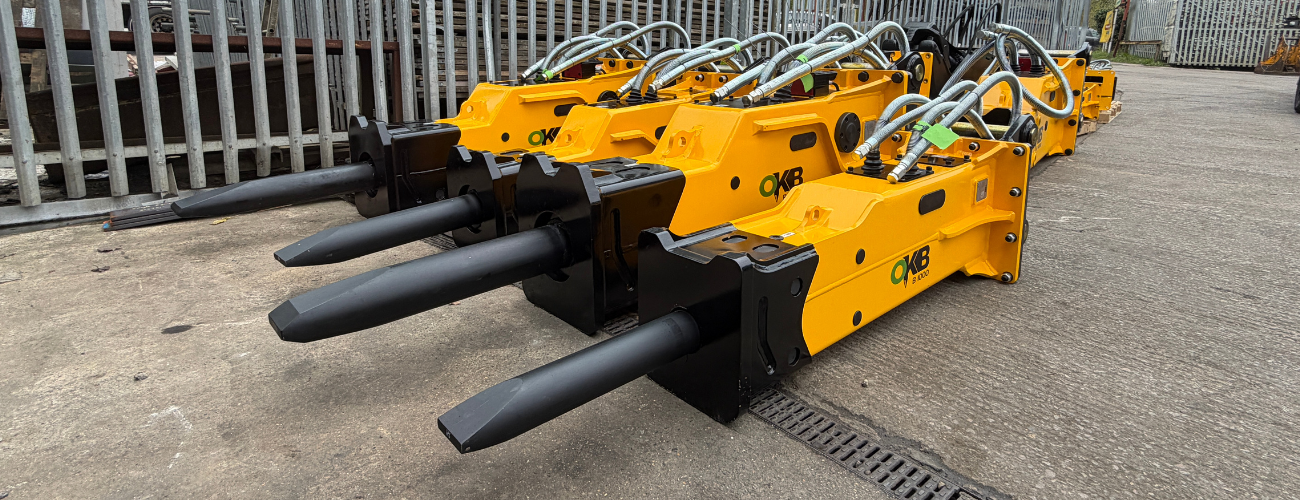
A hydraulic breaker needs sufficient power and impact energy for the material being broken. An undersized or unsuitable breaker could mean spending longer on the same task, increasing machine hours and fuel consumption in the process. The same principle applies across the entire attachment range…
A selector grab allows materials to be handled, sorted and positioned efficiently rather than relying on an attachment that wasn’t designed for the task.
A hydraulic compactor plate provides a purpose-built method of compacting trenches and ground, helping operators cover the required area effectively and reducing unnecessary machine movements.
For demolition and recycling applications, crushers and concrete crackers allow material to be processed using the excavator itself, while specialist attachments such as tree shears give operators the correct tool for vegetation and forestry work.
It’s a simple principle: the easier it is for the machine to perform the task, the less time it needs to spend doing it. Thus, the less fuel burned in the process.
Look beyond the purchase price
When budgets are under pressure, choosing equipment based predominantly on purchase price can be tempting. But the cheapest attachment to buy isn’t necessarily the cheapest attachment to operate. If an attachment takes longer to complete the work, requires additional passes, or creates unnecessary machine movements, then the cost quickly begins to add up. An attachment should be considered in terms of its whole-life productivity: what can it achieve, how effectively can it achieve it and how reliably can it continue doing so?
Productivity per litre
There’s another way to think about fuel efficiency on site.
Instead of simply asking:
“How much fuel is this excavator using?”
Ask:
“How much work are we getting from the fuel it’s using?”
If two excavators consume a similar amount of fuel per hour, but one can complete the same job considerably faster because it’s equipped with the correct attachment, the difference in overall fuel consumption can be substantial. Multiply that across days, weeks and an entire fleet, and seemingly small improvements in productivity can start to have a meaningful impact on operating costs.
It’s why attachment choice shouldn’t be an afterthought. Good machine management, reducing unnecessary idling, effective site planning, preventative maintenance and efficient operators all have a part to play in reducing on-site costs and fuel consumption.
At OKB Attachments, our range of hydraulic attachments is developed for demanding applications across construction, demolition, plant hire and material handling. From hydraulic breakers and selector grabs to compactor plates, crushers, concrete crackers and specialist attachments, the aim is simple: give the machine the right tool to get the job done effectively.
You may also like...
Back to Blog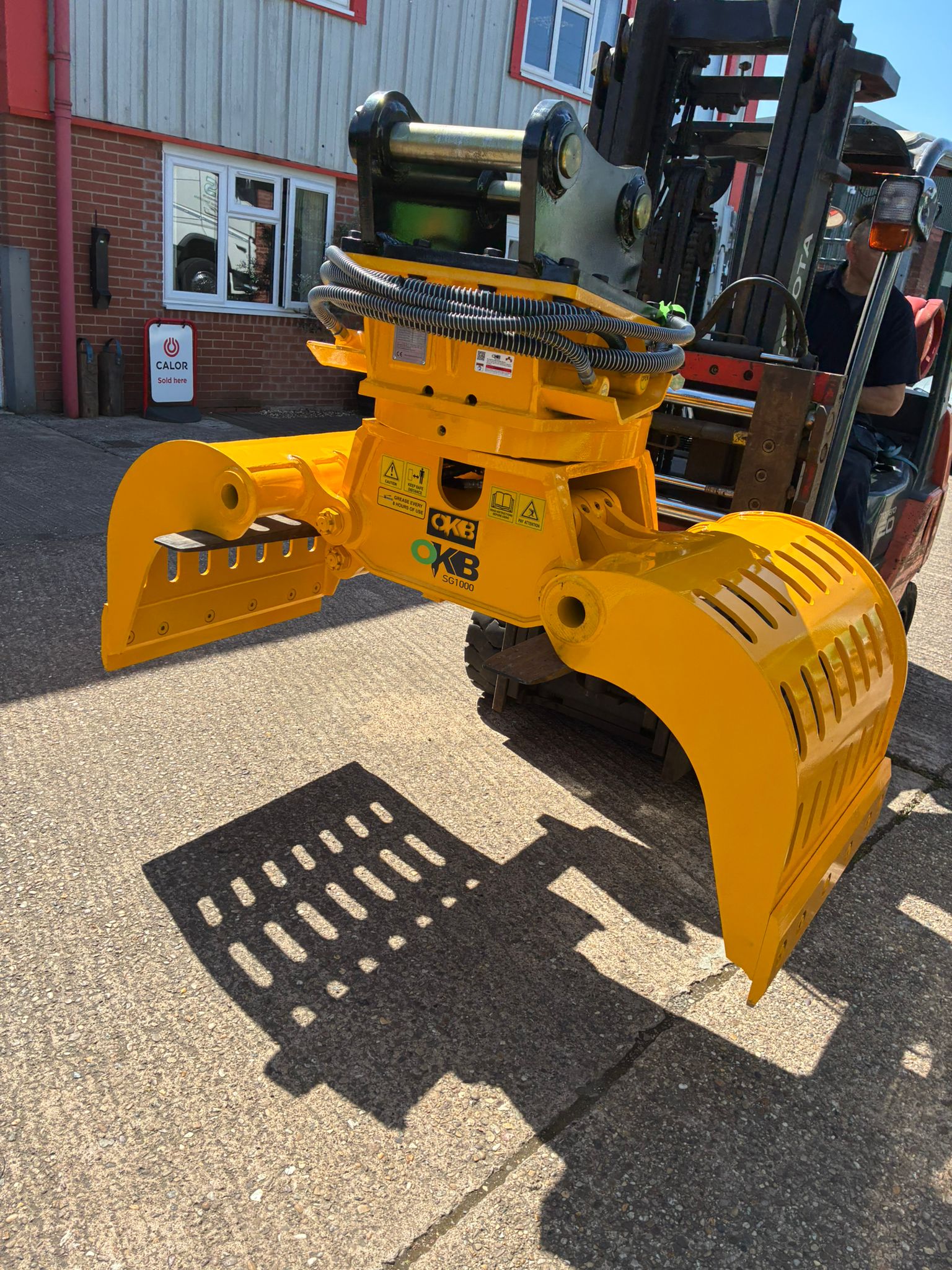
Welcoming MSM DRH to the OKB Dealer Network
MSM DRH join the OKB Attachments dealership network. Providing attachment sales and installation sup...
Read More
OKB Attachments Attending Hillhead 2026
OKB Attachments takes stand Q10 at Hillhead construction show in 2026. Showcasing the entire range o...
Read More
Choosing the Right Attachments for your Construction Site
Matching the tools to the job can be tricky. With multiple brands available and all of them having t...
Read More